

Oak Woodlands of Golden Gate Park
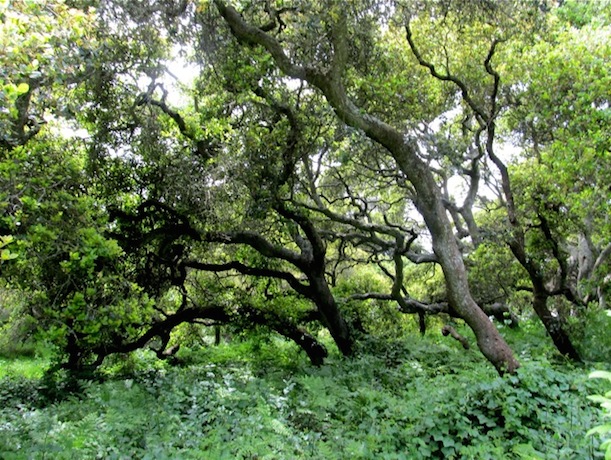
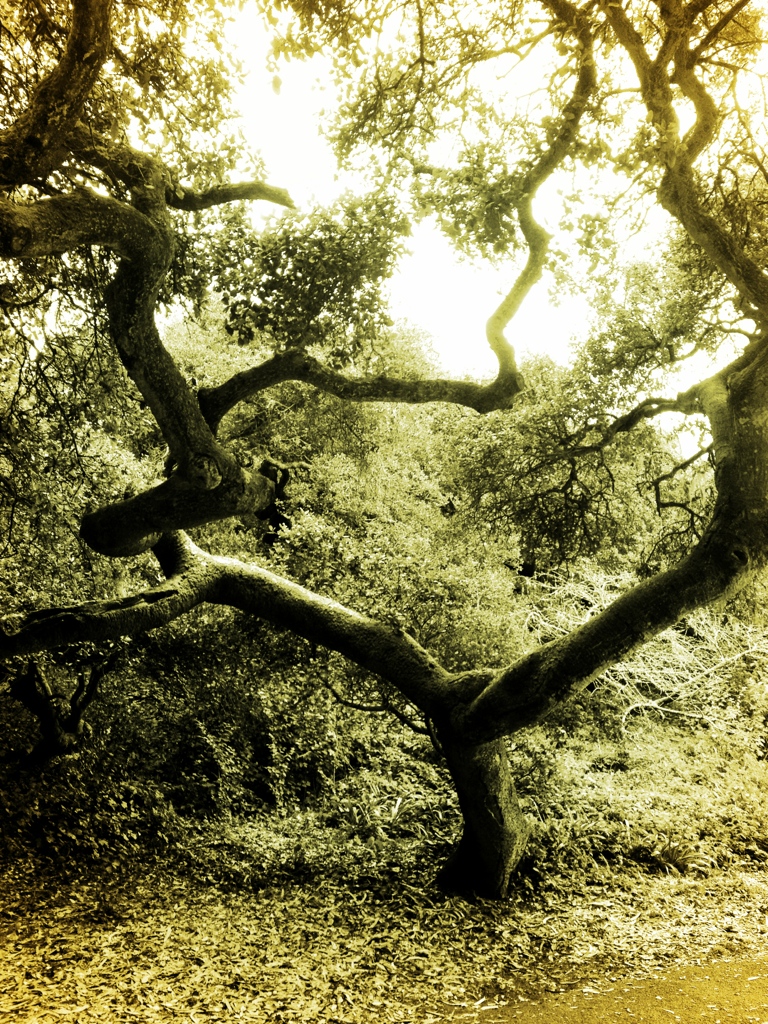
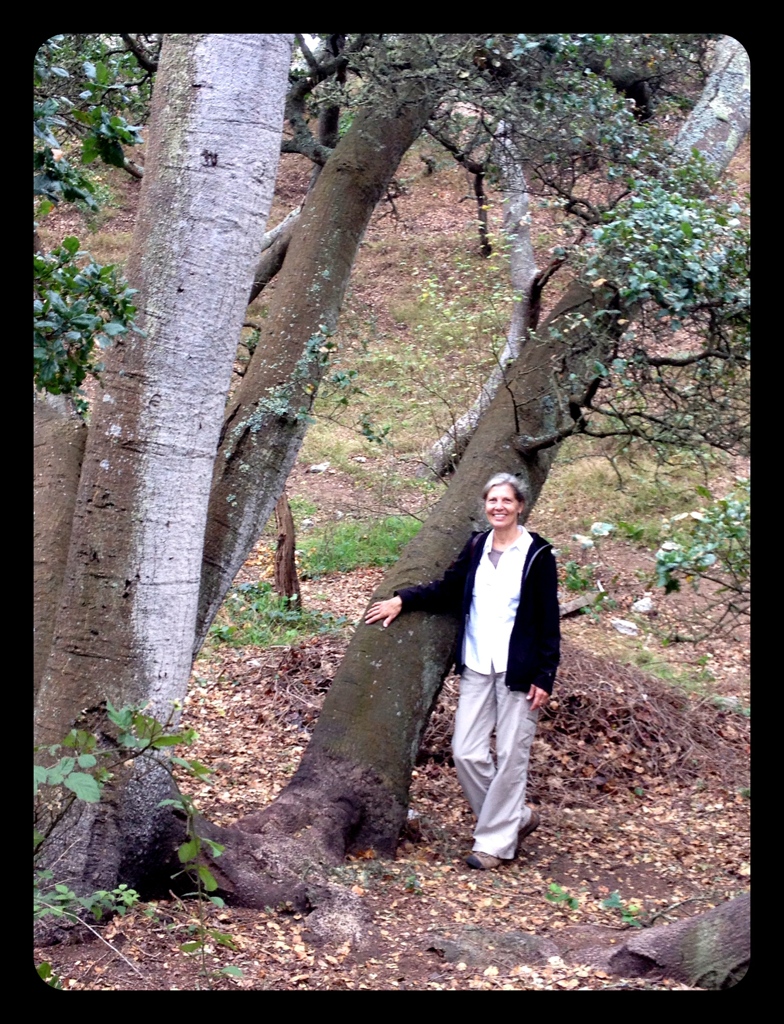
The northeast corner of what is now Golden Gate Park contains a length of rocky prominence suitable for Coast Live Oak (Quercus agrifolia) to grow amidst the sand dunes that once covered the majority of the peninsula of San Francisco. When the Park was established in 1871 approximately fifty acres of this wooded oak area was left as wilderness. After the catastrophic 1906 earthquake some displaced residents sought refuge in this oak woodland and trees were cut for fuel. Some of the trees in the Golden Gate park oak woodlands today have regenerated from sprouts of those original trees. They have not yet regained their maximum size although there are some very large ones.
Some of the groves have a scattered overstory of human introduced non-indigenous trees such as the blue gum eucalyptus and the Monterey pine and cypress. Invasive species have changed the nature of the woodland, but aggressive restoration efforts are gradually bringing it closer to its native condition. Do not expect dense forest, but use your time here to celebrate and imagine the original landscape of the Bay area.
Coast Live Oak would have been scattered in various places around San Francisco and stands still exist near Lobos Creek (where the photographer Ansel Adams explored as a child) and Glen Canyon. A few can also be found around El Polin Spring where Spanish Colonial businesswoman and landowner Juana Briones lived near El Presidio which was founded in 1776.
View All Network Forests in the State of California
View All Network Forests in the U.S.
View All Forest Designations