Cabinets of Curiosity at OGFN’s Newest Private Forest
By OGFN Intermountain West Regional Manager, Ashley Martens
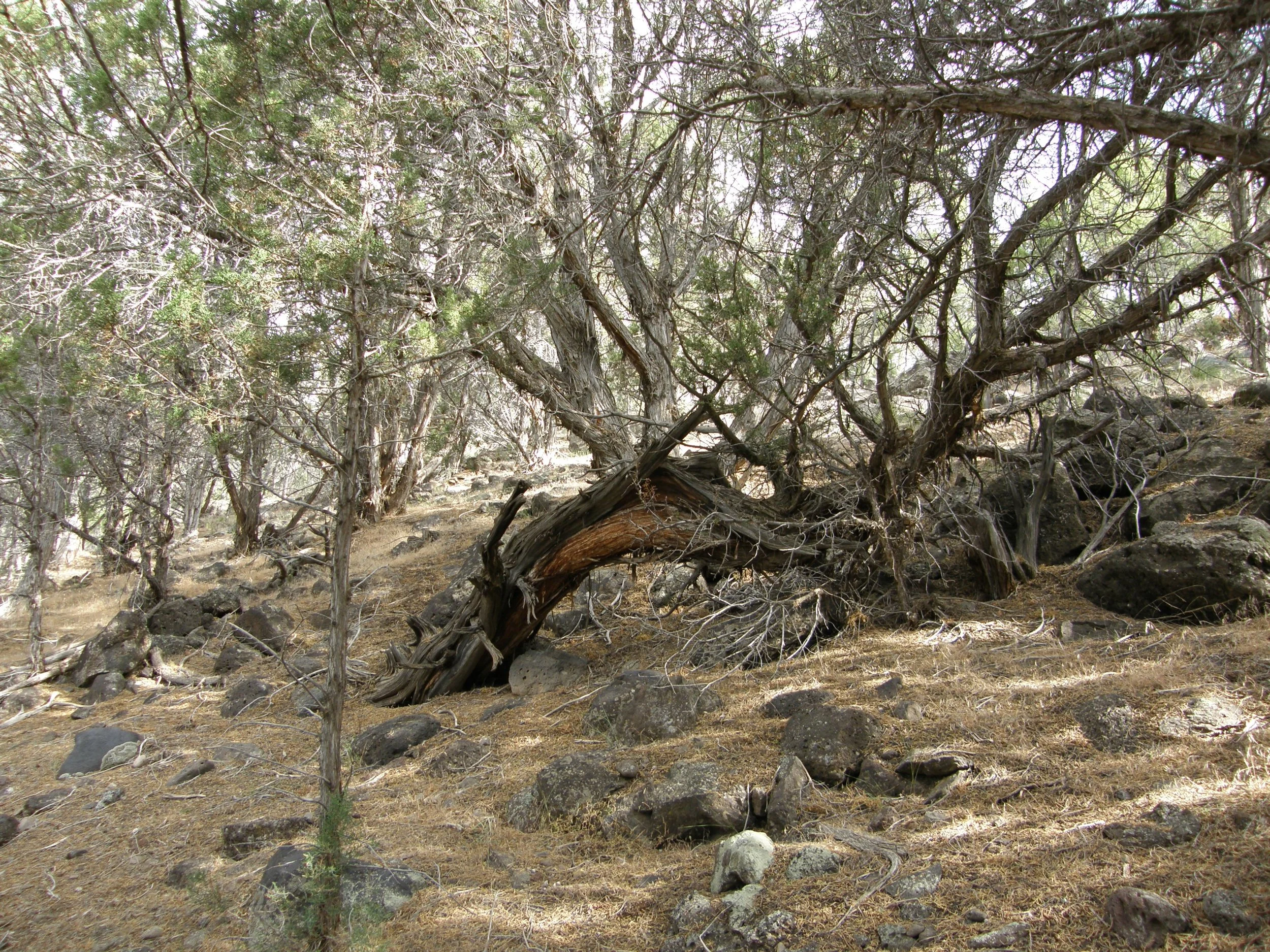
In a remote forty-acre section of Western Colorado stands a beloved ancient woodland of gnarled and vibrant junipers that watch over secret springs, rare orchids, wild animals, and two endlessly curious and creative humans, Katherine and Joseph Colwell. Throughout their home, cabinets and computers are full of amazing stories about this place. Let’s peer into a few of these cabinets to learn about OGFN’s newest private forest, shall we?
Cabinet 1: Photographs of Trees
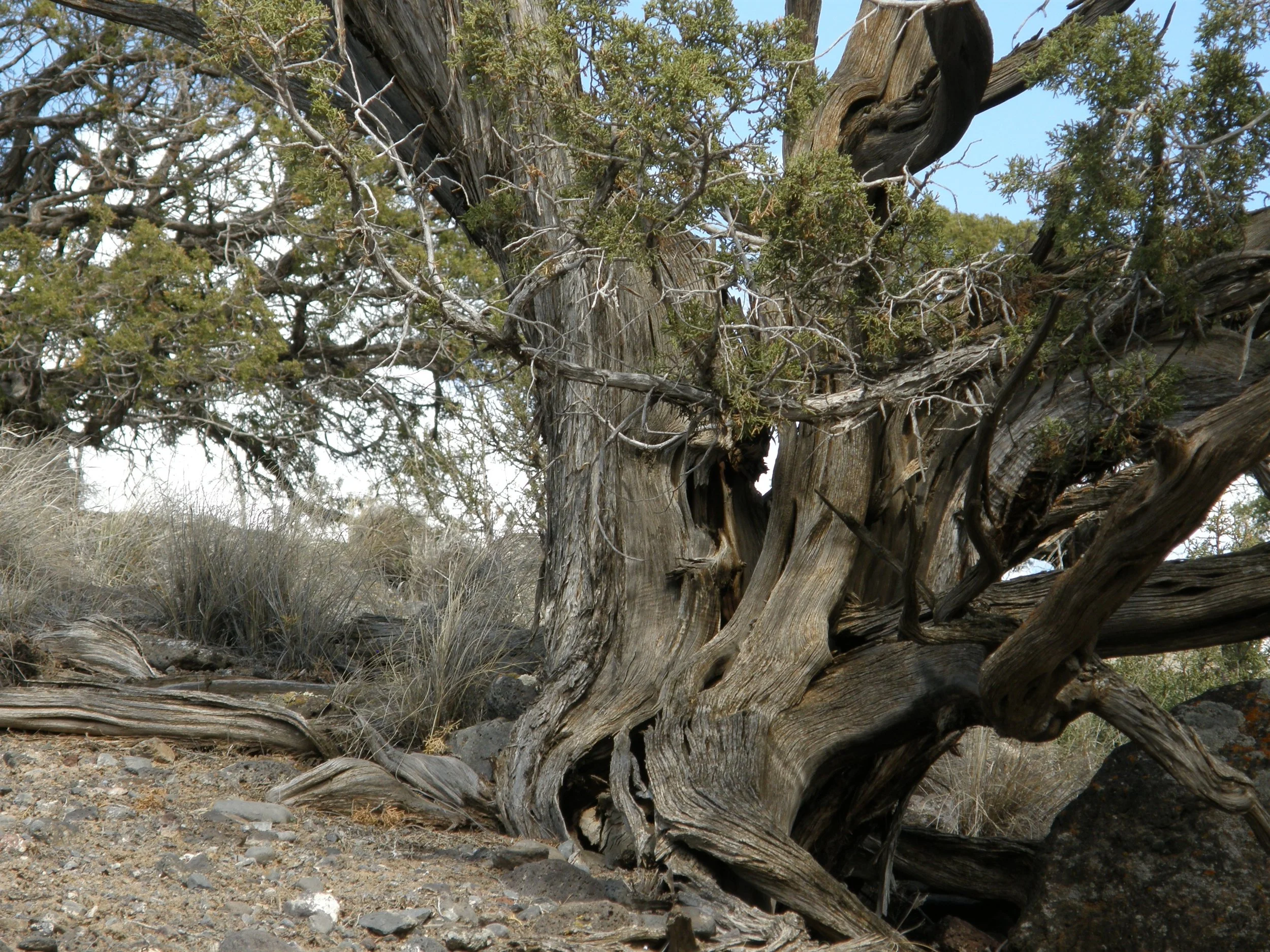
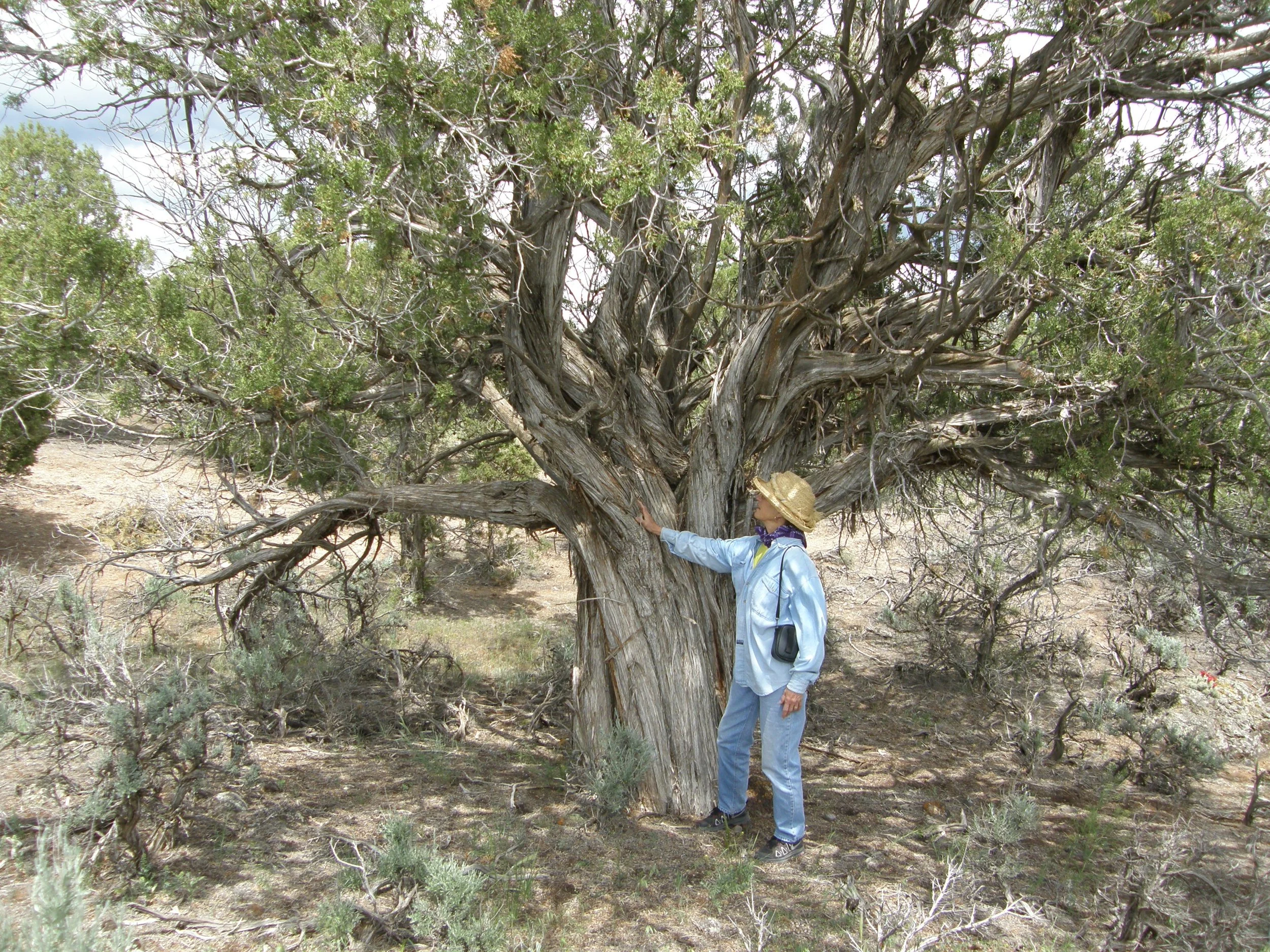
This first cabinet is brimming with pictures of trees in countless shapes and sizes - tall and spindly, thick and twisted, furry with peeling bark, bare-barked but lichen-encrusted. Joe calls each one a structurally complex “natural sculpture”, with their own unique qualities. Katherine describes the non-living portions of these as having a “unique quality of deadness”. The scientific name of all of the trees is Juniperus osteosperma, the Utah Juniper. But, like family, each individual is different and many earn names of their own as the Colwells develop relationships with them. The Brontosaurus Tree swoops broad in stature, and the Octopus Tree’s trunks climb out in all directions. The hundreds-of-years-old Jupiter Tree stands massive in both diameter and height, which is an unusual combination for the species. It is surrounded and protected by large boulders named after Jupiter’s moons. It is unsurprising that some of the Colwell’s trees are named after space stuff. Katherine looks at the NASA Astronomy Picture of the Day each morning, Joe follows Neil de Grasse Tyson’s Space Talk, and many of Joe’s essays involve the vastness of time and space in the universe. All of which makes the ancient junipers seem young.
Other trees are named for stories that unfold within their branches. One March morning in their early years as stewards of the land (with lots still to learn), Joe and Katherine spied an odd shape up in the then-current nesting tree for resident Great-horned owls. Joe offered his knee to boost Katherine up to climb through the classic twisted and multi-branched tree to investigate. Just as her hand was about to grab onto the mystery object, Joe shouted, “Look out!” What she nearly grabbed was actually the tail of a Great-horned Owl. The Owl Tree continued to host owl families for years.
Some trees are named for the people who liked them. When guests, family, and friends visit, Joe says, “we go hiking and we’ll say, you pick a tree and we’ll take a picture of you with it”. Usually, the person is dwarfed by the size of the tree. That tree becomes known as the person who chose it – the Linda Tree, the Doctor Ray Tree. (They assure me that when I come, I’ll get to do that, too. I can’t wait.)

Cabinet 2: Science and Wonder
Another cabinet is filled with a scientific inventory of the ancient ones. Nearly 5 years ago, Katherine began a project of cataloguing the ancient junipers in order to “meet each one”. She has officially met about 300 trees so far. Each juniper is documented with photographs, a numerical name-tag, measurements, descriptions, and exact location. She tells me how she is “still surprised with every tree” that she documents. She delights in seeing them from different directions, beholding their unique qualities of deadness and aliveness. “Theres’s a sense of wow constantly, and then coming back and telling Joe what I saw - its’s all new every single time”.
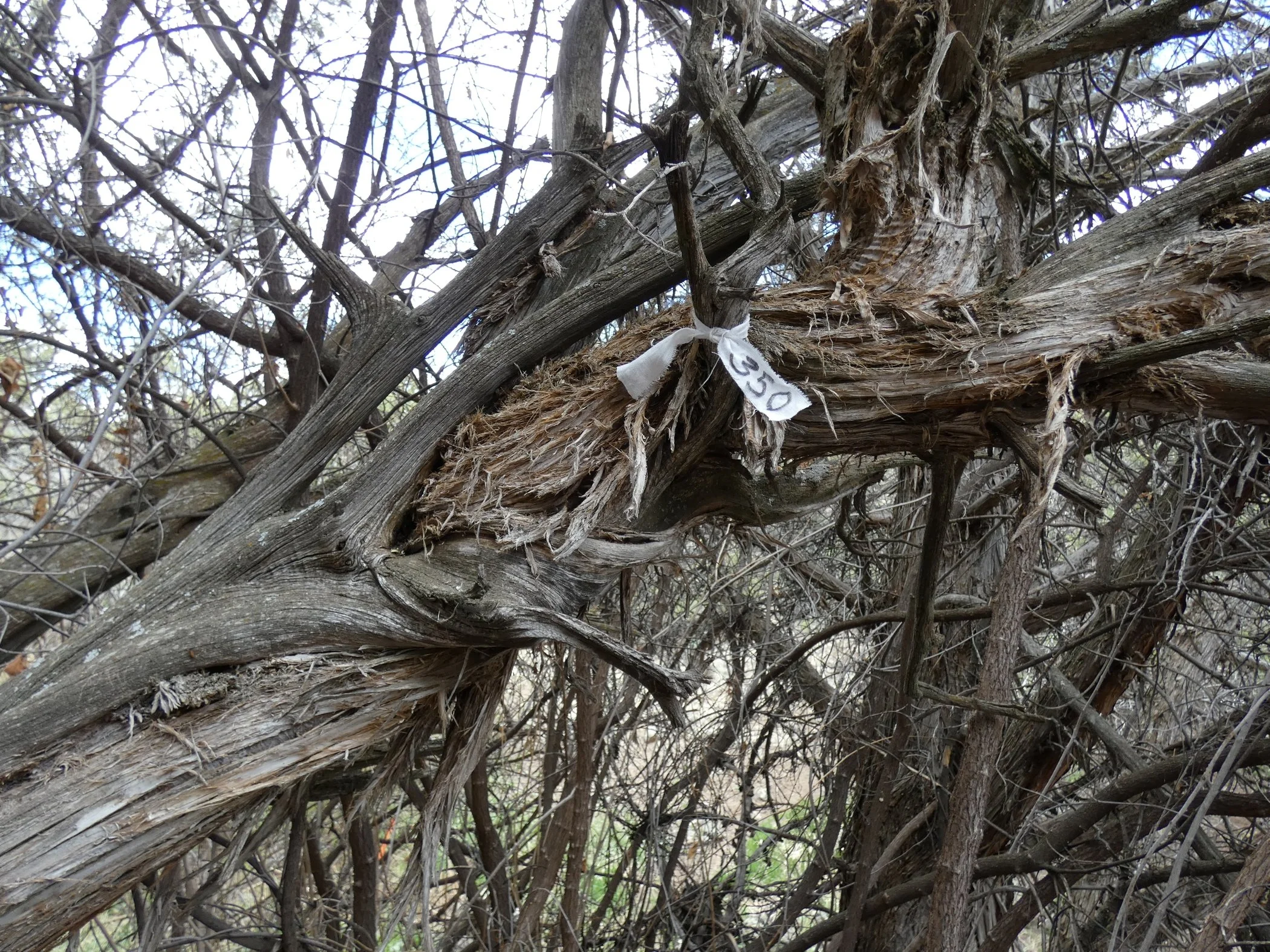
Tree 350F with Tag
Cabinet 3: Tree Cookies
A third cabinet is stacked full of cookies. “We have them from all over this property as well as other places we’ve lived: a four-drawer file cabinet full of them”. These are “tree cookies”, to be exact, which are as you might imagine – thin, roundish, sliced from a tree trunk like you would slice a log of refrigerated sugar cookie dough before baking. The concentric rings and bark edges of each tree cookie reveal stories about the tree’s life and life around it while it was living. Joe and Katherine use tree cookies in their educational programs on their land to encourage curiosity. They teach math by asking students to count rings to guess the tree’s age when it died, look for signs of fire scars or gnawing by porcupines to see how the tree had to adapt, and imagine what people were living nearby as this tree stood 200 years ago. They ask their students, “What would you have seen through this tree’s eyes? Can you write a poem or prose about it? Draw a picture?”. They guide people to unlock their creativity by spending time on the land. And Katherine and Joe are experts at this.
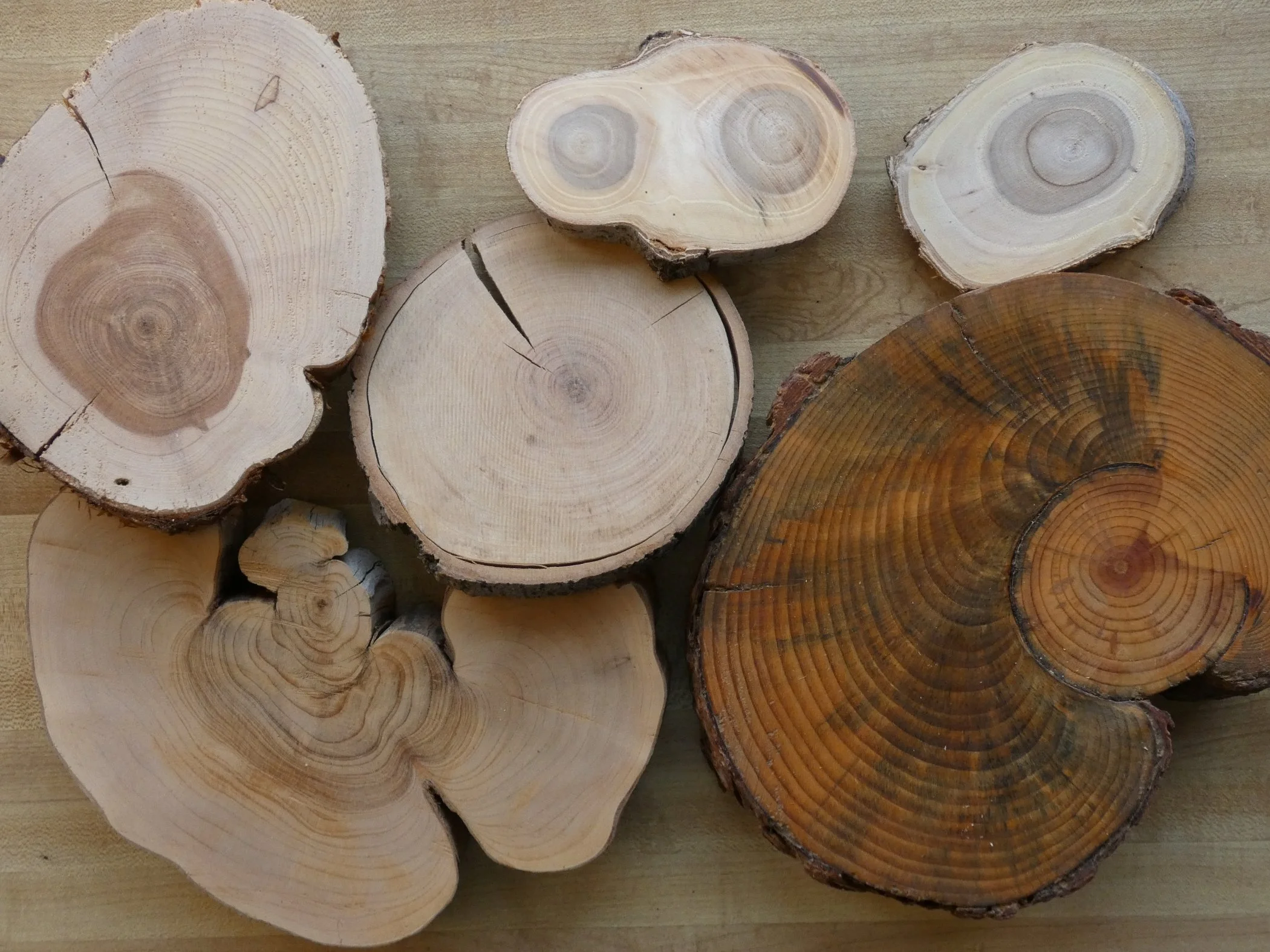
Tree Cookies
Which brings us to our final cabinet…
Cabinet 4: Creativity Unlocked
This last cabinet is overflowing with shapes, colors, patterns, poetry, and prose. The Colwells are artists and writers at their cores and they are endlessly inspired by their connections with the land. To Joe, “it’s just like breathing, I can’t not do it”. During his U.S.Forest Service career across the West he worked in diverse forest ecosystems utilizing his degree in forestry. And these days, he is constantly creating place-based stories and poetry in his head based on what he sees, hears, and feels as he walks the trails in the Colwell Nature Preserve. “I’ll come back and write it down”, he tells me. Some are creative works of fiction, others are poetry or history or nonfiction. Buttercups bloom where they found a dead mountain lion early one winter, and he wrote a poem in honor. As he cleans up metal remnants left from the previous owner of their land, a recluse homesteader named Hazel, he creates a fictional story of her life called “The Hermit of Puccini Ridge”. “Tragedy at the Owl Tree” is a short story written after an owl is found dangling dead from a juniper. All of these writings can be found on their website.
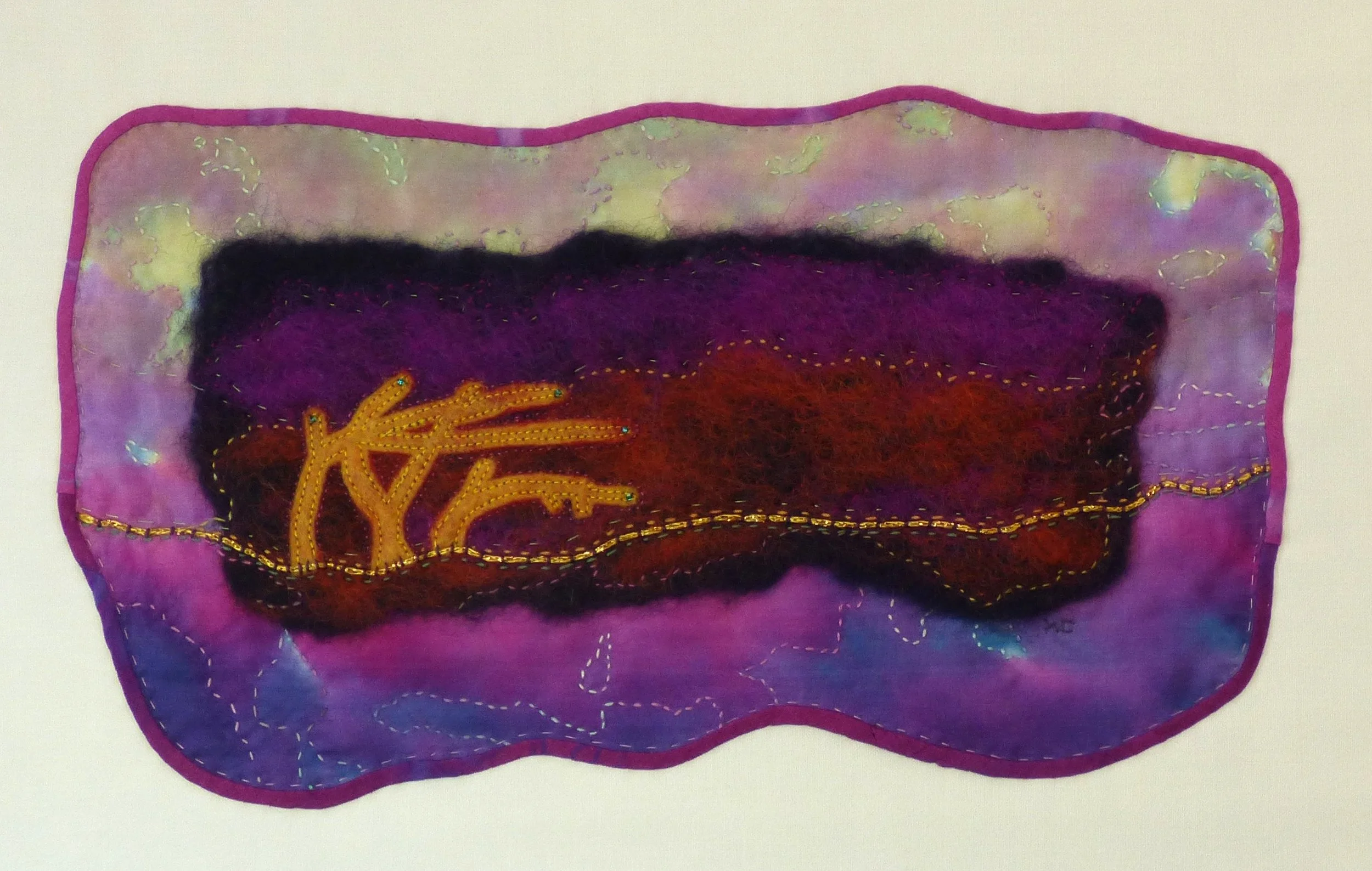
Where Joe creates with words, Katherine creates with images. The tools of her trade are countless: graphite, watercolor, pen & ink, etching needles & stitching needles, papers, silks, wool, velvet, colorful pigments for dyeing, matte and glistening embroidery threads, the tiniest of seed beads. She brings these together to create intricate multi-media landscapes featuring - you guessed it – mostly trees. You can see some of Katherine’s creations on their website.
What can’t be contained in a cabinet or computer or held in my hand is the limitless sense of reverence and love that the Colwells have for this place they call home. We are honored to welcome them into the Old-Growth Forest Network. Someday, I will visit this ancient juniper woodland, and someday you can, too. The Colwell Nature Preserve is open by appointment only to visitors who want to take a guided nature walk or an art class.