Bioblitz Discovers Rare Insects in Threatened Maryland Forest
Dr. Joan Maloof, the Old-Growth Forest Network’s Founder, is a dedicated protector of her home state’s forests. Every year she meticulously reviews the work plans for Maryland’s State Forests. This year, a particular stand in the Pocomoke State Forest plan caught her eye: a 45 acre stand that had just reached 100 years old that was planned to be harvested. She set aside a day to try to locate the forest and examine it more closely.
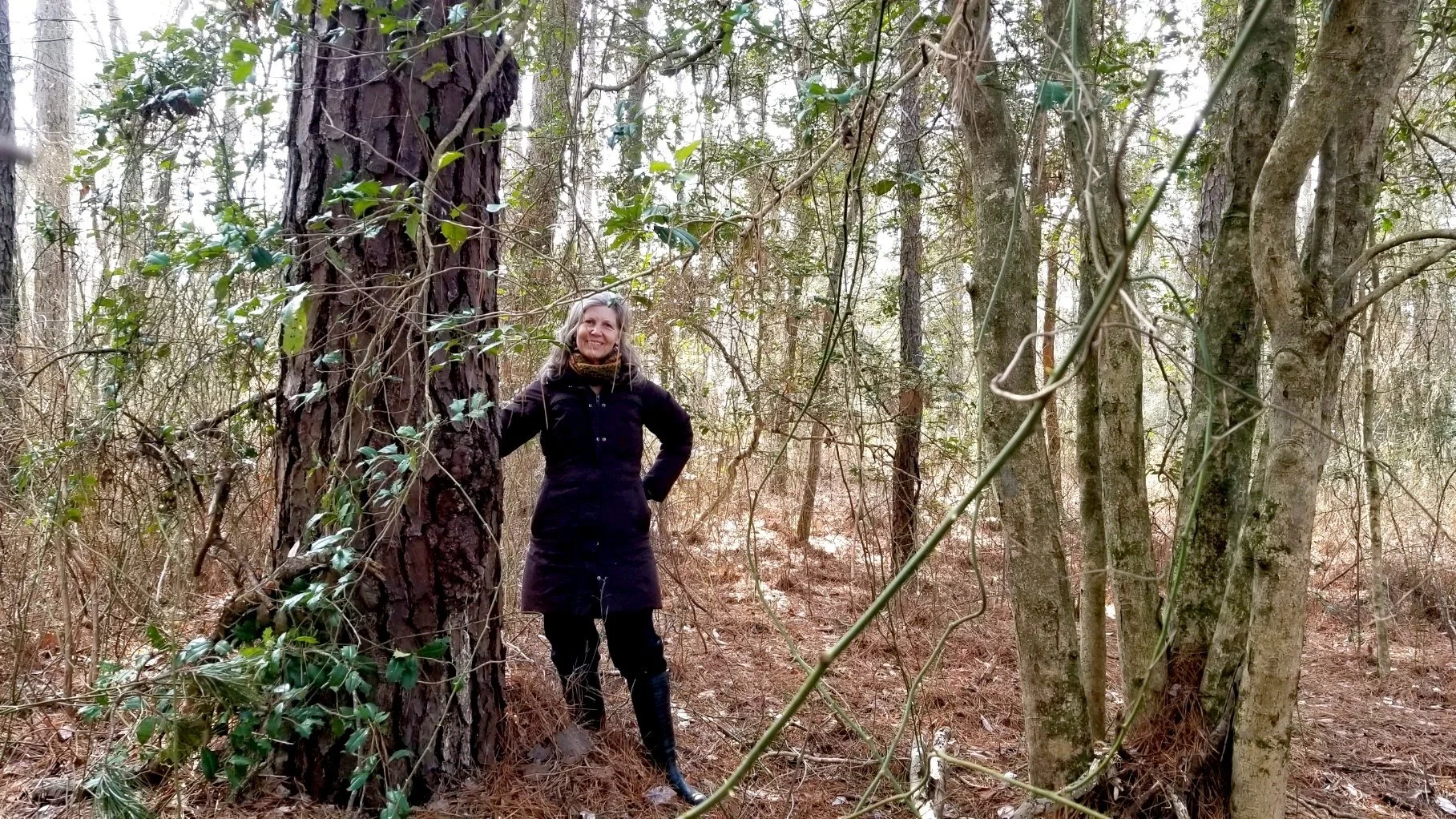
As she approached this stand she discovered that the tract identified for harvest lined both sides of a local recreational trail. The trail was lined with blooming mountain laurel and the forest was much more than just pine, which was how the work plan described it. What she saw was a diverse mixture of pine and hardwoods with an age and structure that was nearly old growth. Just from the trail she could identify seventeen different tree species. Many of them were quite large – over ten feet in circumference. A naturalist friend who accompanied her identified over twenty bird species.
Joan Maloof returned home with these findings and sent comments to the state’s Department of Natural Resources (DNR) requesting that the forest not be cut. She encouraged other Maryland residents to do the same and over fifty-five people sent in comments requesting the blue/green bike trail forest not be cut. There has been no response from DNR. Is the forest still on the harvest list? Might we find it destroyed the next time we visit?
Cristina Niciporciukas, chair of the Eastern Shore Chapter of the Maryland Native Plant Society, was eager to see what unexpected flora and fauna this forest might reveal. Niciporciukas visited the forest with Maloof and both agreed that an expert “mini-bioblitz” was called for. A bioblitz is an intense, fast-paced inventory of all of the forms of life in a given area. The team used iNaturalist to record their observations. Niciporciukas led the coordination, and with Maloof’s support, attracted fourteen experts who offered their time and expertise, several of them driving well over a hundred miles to join the effort. A long list of organisms was identified on May 16 & 17, 2026, but the most exciting were the insects. UV lights shining on white sheets attracted over two hundred species of insects. Three of them were particularly noteworthy: Platydema nigrata, a species of darkling beetle, was recorded for the first time in Maryland during this survey.
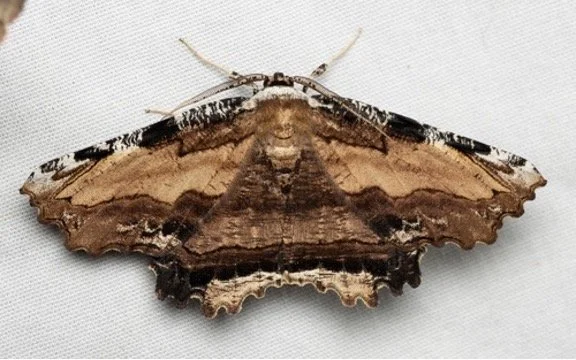
Image of the rare moth, Lytrosis sinuosa (© Adrienne van den Beemt).
In addition, the observation captures a new northern range extension for this beetle. Lytrosis sinuosa, the sinuous lytrosis moth, is a state rare species (S1S3) which hadn’t been reported in the state in 5 years as per iNaturalist records. It is listed on the State Wildlife Action Plan as a species of greatest conservation need. Also, Hyporhagus punctulatus, an opossum beetle, had never before been identified before this survey in Worcester County, where the forest is located. There is no doubt that revisiting the forest in different seasons would add additional species to the long list.
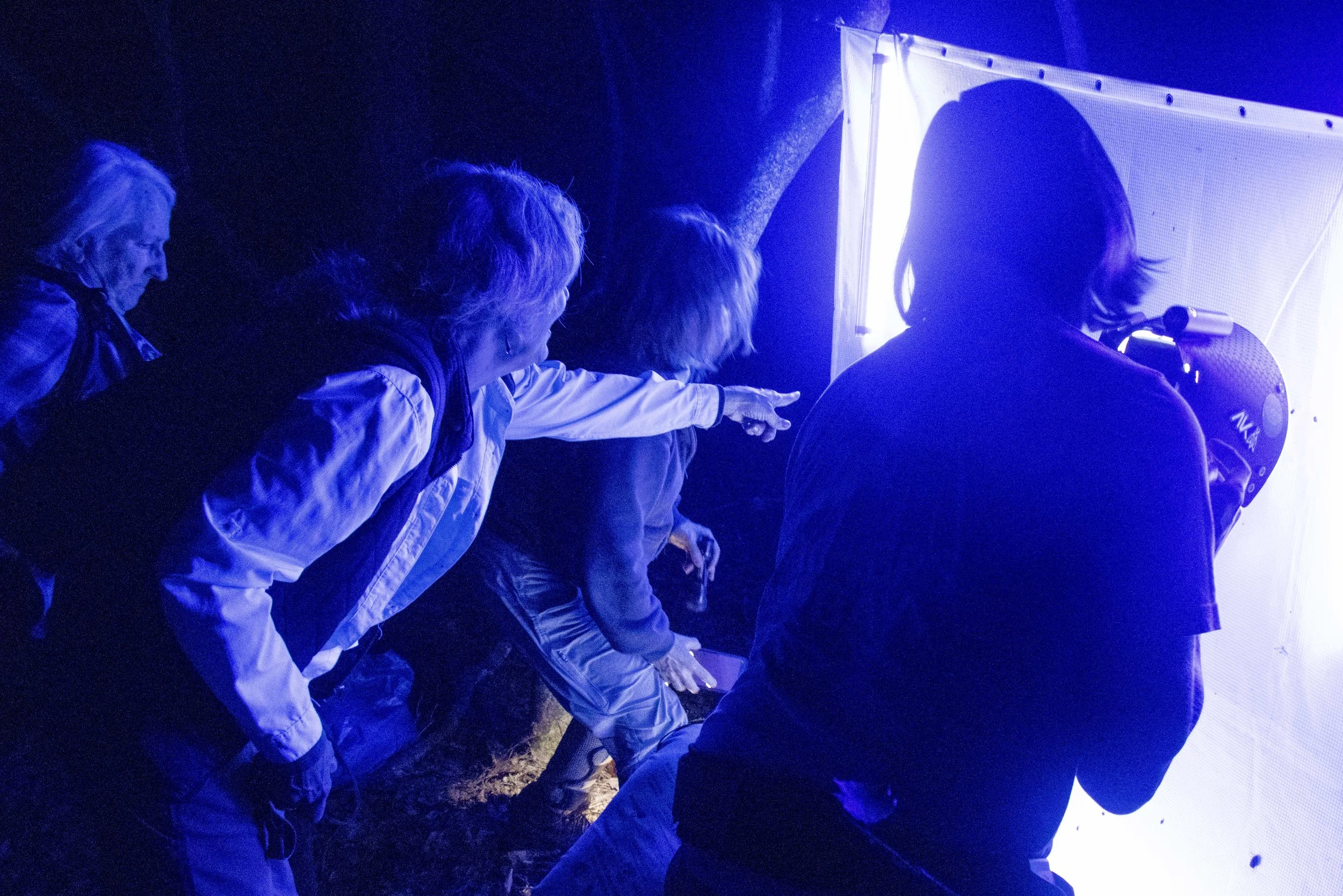
Attracting forest insects at night using ultraviolet light. Photo courtesy of Kevin Frest.
Maloof is preparing a report for the Department of Natural Resources in hopes that this preliminary survey will cast a new light on the vital ecological value of the forest and convince the department to keep the forest and its biodiversity intact instead of harvesting it. This is one example of how naturalists and taxonomists can play an important role in helping to highlight the biodiversity often overlooked or underestimated by forest managers.
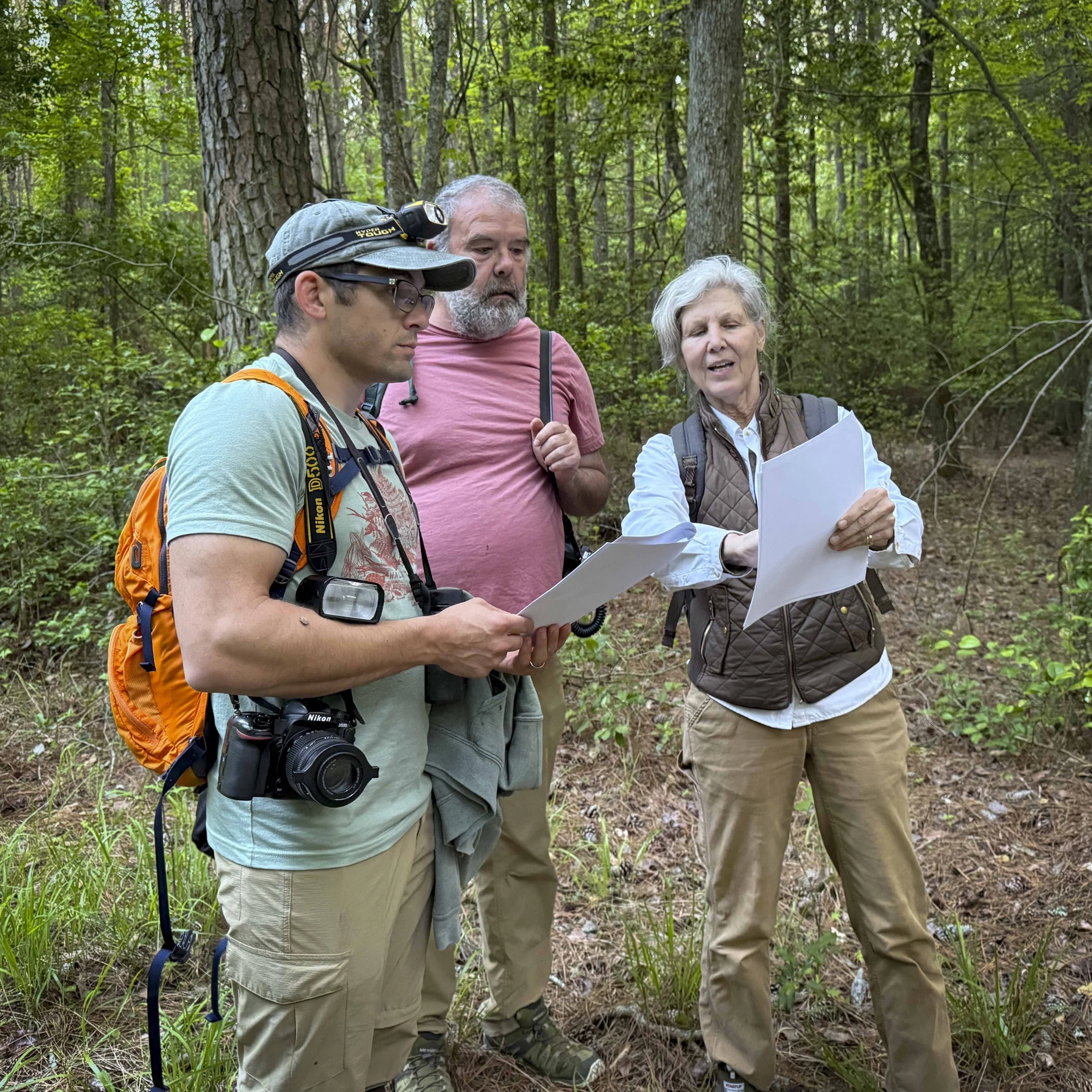
Maloof pointing out the proposed cut area to Jared Bennett of Coastal Resources Inc. (left) and Jim Brighton of the Maryland Biodiversity Project. Photo courtesy of Kevin Frest.
Can you see yourself putting together or participating in a bioblitz in your region? Check out this how-to guide from iNaturalist for more information about bioblitzes and how you can organize one near you.