
URGENT: Help us Protect Millions of Acres of Old-Growth Forest
URGENT: Comment by October 6th
Save Threatened Wild Forests
We need your support to defend the 2001 Roadless Area Conservation Rule, which currently safeguards approximately 58 million acres of national forest land in “Inventoried Roadless Areas.” These Inventoried Roadless Areas, wild National Forest areas set aside from any additional roads being carved through them, have additionally been protected from logging and extraction with the 2001 Roadless Rule. HOWEVER, now the US Department of Agriculture is trying to strip this rule away. Roadless Areas contain over 9.1 million acres of old-growth forest, so we need your help speaking up against this threat!

A unique comment submitted directly by you holds the most weight in this process. If you can, please submit a comment - however short or long! - talking about how the Roadless Rule should remain strong, intact, and unchanged.
How to Comment
If you only have a moment:
Sign your name onto a petition-style comment
If you have a few minutes to help:
Submit your own, unique comment directly. This is the highest impact option. See below for guidance on text to include.
If you want to use a comment-builder tool:
This will help generate impactful language that relates to what you care about:
-
Say you support Alternative 1 or the “No Action" Alternative. This would retain all protections from the 2001 Roadless Rule.
1/3 of all National Forest Old-Growth Areas are found in Roadless Areas, according to the Forest Service’s own 2023 Inventory. Old-growth forests can take centuries to develop or regrow, so we need to leave these places untouched by roads and logging.
These old-growth areas have biodiversity, complexity, and carbon storage that cannot simply be regrown or replaced within our lifetimes.
We need Roadless Areas protected to help retain the old-growth forests we have and give future old-growth the best possible chance to develop and try to replace the vast amounts we have lost.
Roadless Areas are large, connected blocks of habitat that have become increasingly important as surrounding forests are fragmented, which degrades habitat, water quality, climate resilience, and opportunities for peaceful recreation.
Roads actually increase the risk of wildfire, with researching showing fires are 4x more likely to start near a road than in unroaded areas. Building roads is not a wildfire solution and the current rule already allows hazardous fuels treatments.
The Roadless Rule already has the exceptions and flexibility it needs to address issues to keep communities safe and connected.
Roads are a major source of water pollution and Roadless Areas are a large and important source of clean drinking water supplies.
Watch our informational webinar for more information about the Roadless Rule, what’s at stake, and how you can make your comment!
How much Old-Growth is at stake?
The 2023 Old-Growth Inventory identified 9,116,931 acres of Old-Growth Forest within Inventoried Roadless Areas.
This is a little over ⅓ of the total old-growth forest inventoried across all national forest lands and about 6% of our total Roadless Area lands. That is a huge proportion of our public old-growth forests that could become vulnerable without the Roadless Rule! Note: Idaho and Colorado have their own Roadless Rules that are not effected by the current policy change.
Not only are our crucial old-growth areas at stake, but the older, mature forests that are set to age into old-growth in the next few decades are also at stake. How are we supposed to restore old-growth in the US if so much soon-to-be old-growth becomes open for logging?
Where are the Roadless Areas?
See them on this map. They exist in 38 of our 50 states.
What could happen if the Roadless Rule were rescinded?
Logging and road building may resume after 25 years of protection, fragmenting ecosystems, opening access for invasive species to be introduced, intensifying soil erosion and sedimentation, and disrupting hydrological systems.
Carbon storage could decline: old-growth stands in IRAs currently act as critical carbon sinks; their degradation would significantly reduce ecosystem carbon sequestration capacity. Mature and Old-Growth Forests store vast amounts of carbon and serve as a nature-based approach to mitigating climate change.
Threatened, endangered, and sensitive species could lose vital habitat: IRAs support habitat for more than 65% of all sensitive species tracked by the Forest Service.
Water Quality will suffer: Roads are a major cause of water pollution and intact forests within Roadless Areas are vital for maintaining clean drinking water for communities across the country. Los Angeles, Portland, Denver, and Atlanta receive a significant portion of their water supply from national forests.
Greater risk for human-caused wildfires: New research from The Wilderness Society, now in peer review, shows that from 1992-2024, wildfires were four times as likely to start in areas with roads than in roadless forest tracts. Anotherstudy showed that more than 90 percent of all wildfires nationwide occurred within half a mile of a road.
Recreation at risk: According to maps from Outdoor Alliance’s GIS Lab, roadless areas protect 11,337 climbing routes and boulder problems, more than 1,000 whitewater paddling runs, 43,826 miles of trail, and 20,298 mountain biking trails. Large sections of the Continental Divide, Pacific Crest, and Appalachian National Trails traverse protected roadless areas.
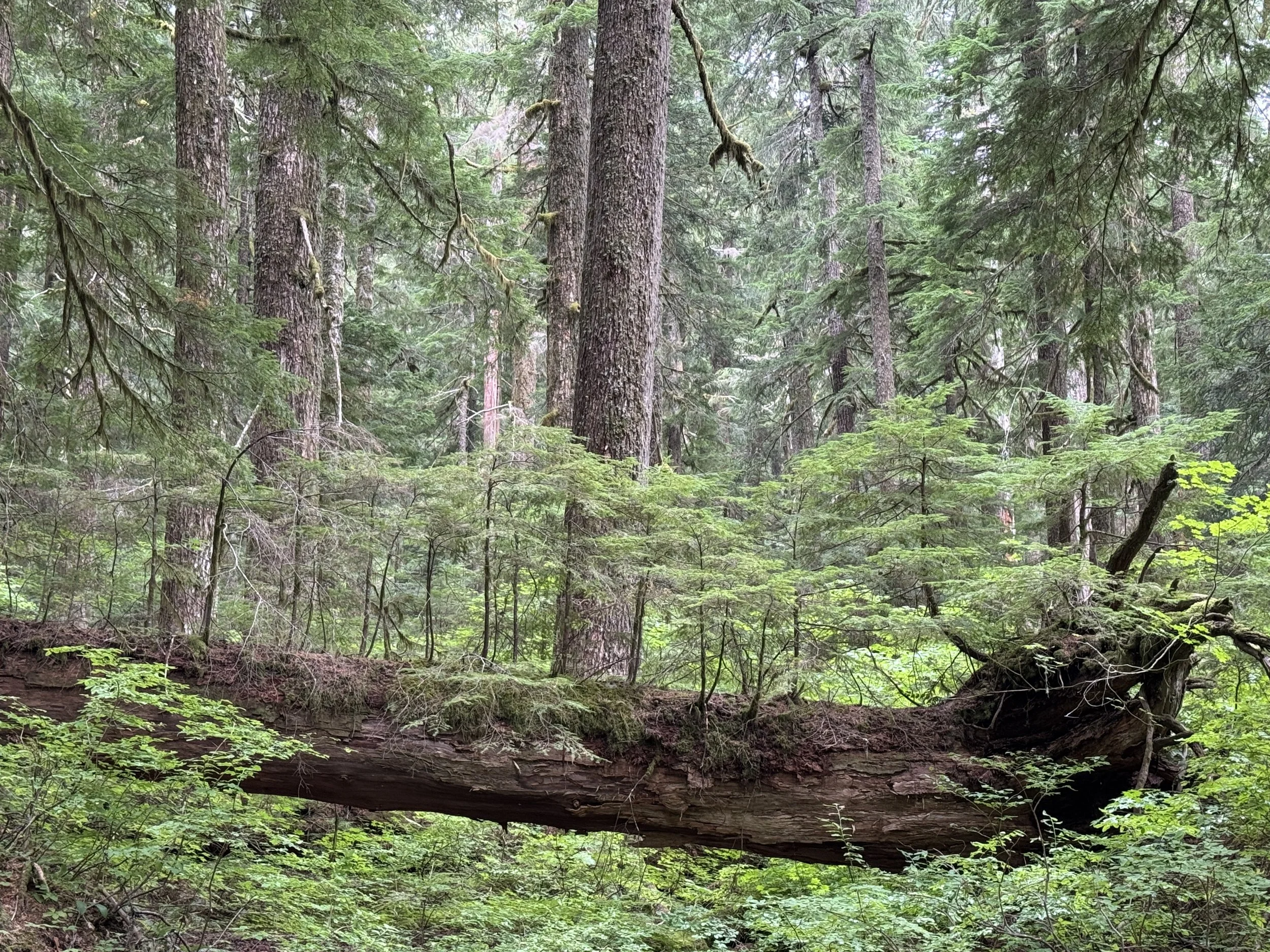
Old-growth nurse log in a Roadless Area: Larch Mountain, Mount Hood National Forest. Photo by Chandra Legue

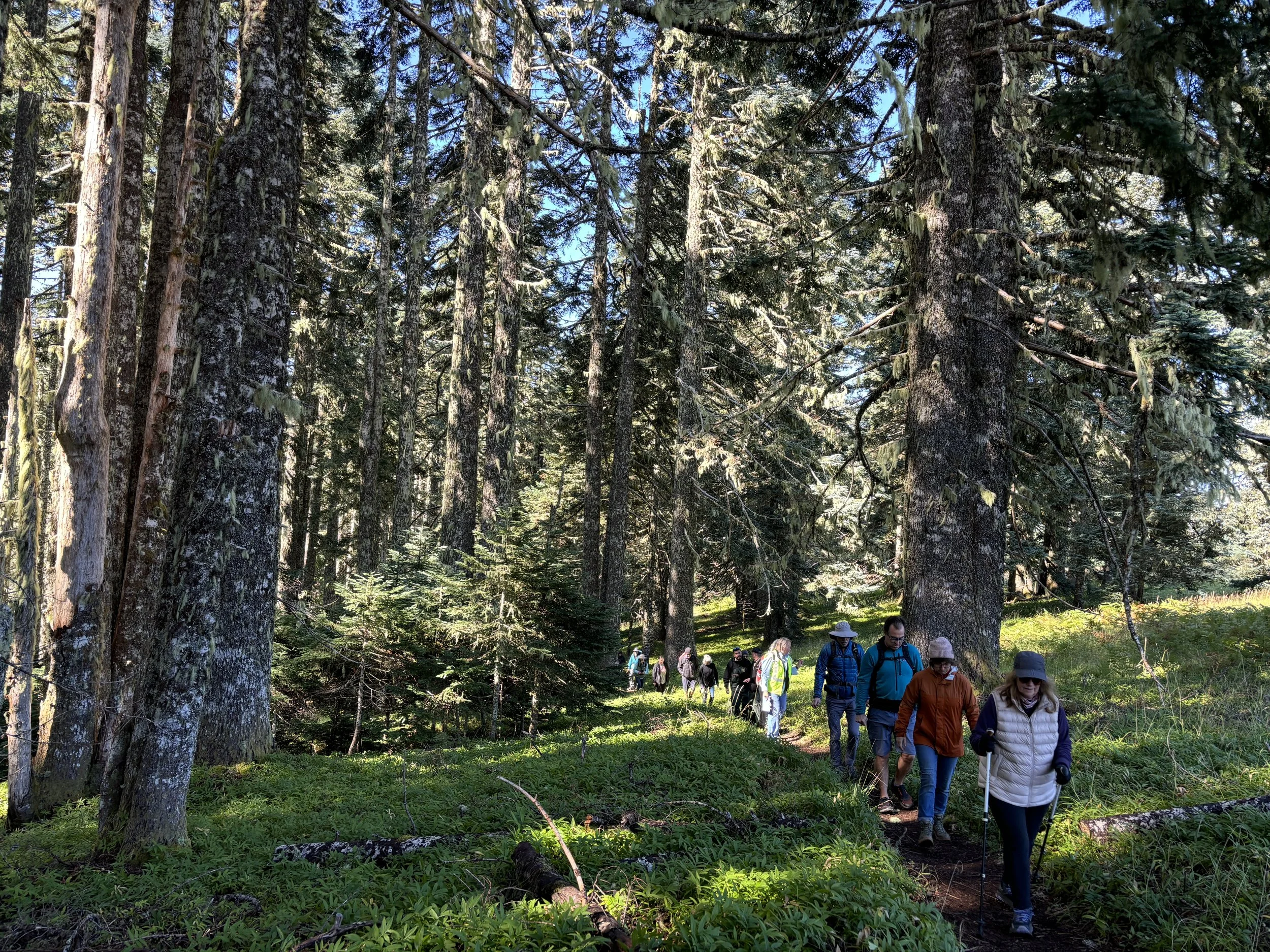
Mature and Old-Growth Forests in Roadless Areas
The interactive map below shows mature and old-growth forests in Inventoried Roadless Areas. These are forests that could become vulnerable to logging and other damaging activities with the repeal of the Roadless Rule.
Notes:
Forest Maturity Data is not available for Roadless Areas in Alaska
Forest Maturity Data will appear as you zoom into the map and may take a few moments to load.
“Mature Forests” are the classified as such in:
Dominick A. DellaSala, Brendan Mackey, Patrick Norman, Carly Campbell, Patrick J. Comer, Cyril F. Kormos, Heather Keith and Brendan Rogers (2022) Mature and Old-Growth Forests Contribute to Large-Scale Conservation Targets in the Conterminous USA. Front. For. Glob. Change doi: https://www.frontiersin.org/articles/10.3389/ffgc.2022.979528/full
Benefits of Roadless Areas
The following benefits were highlighted within the 2001 Roadless Rule. These benefits are more important than ever and still serve as reasons to continue protection of Roadless Areas.
-
These three key resources are the foundation upon which other resource values and outputs depend. Healthy watersheds catch, store, and safely release water over time, protecting downstream communities from flooding; providing clean water for domestic, agricultural, and industrial uses; helping maintain abundant and healthy fish and wildlife populations; and are the basis for many forms of outdoor recreation.
-
Intact plant life and undisturbed soil, water and air create safe drinking water. Healthy watersheds catch, store, and safely release water over time, protecting downstream communities from flooding; providing clean water for domestic, agricultural, and industrial uses; helping maintain abundant and healthy fish and wildlife populations; and are the basis for many forms of outdoor recreation. Los Angeles, Denver, Portland, and Atlanta are major cities whose drinking water comes from national forests.
-
Roadless areas are more likely than roaded areas to support greater ecosystem health, including the diversity of native and desired nonnative plant and animal communities due to the absence of disturbances caused by roads and accompanying activities. Inventoried roadless areas also conserve native biodiversity by serving as a bulwark against the spread of nonnative invasive species.
-
Roadless areas function as biological strongholds and refuges for many species. Of the nation's species currently listed as threatened, endangered, or proposed for listing under the Endangered Species Act, approximately 25% of animal species and 13% of plant species are likely to have habitat within inventoried roadless areas on National Forest System lands. Roadless areas support a diversity of aquatic habitats and communities, providing or affecting habitat for more than 280 threatened, endangered, proposed, and sensitive species. More than 65% of all Forest Service sensitive species are directly or indirectly affected by inventoried roadless areas. This percentage is composed of birds (82%), amphibians (84%), mammals (81%), plants (72%), fish (56%), reptiles (49%), and invertebrates (36%).
-
Roadless areas often provide outstanding dispersed recreation opportunities such as hiking, camping, picnicking, wildlife viewing, hunting, fishing, cross-country skiing, and canoeing. While they may have many Wilderness-like attributes, unlike Wilderness the use of mountain bikes, and other mechanized means of travel is often allowed. These areas can also take pressure off heavily used wilderness areas by providing solitude and quiet, and dispersed recreation opportunities.
-
The body of knowledge about the effects of management activities over long periods of time and on large landscapes is very limited. Reference landscapes of relatively undisturbed areas serve as a barometer to measure the effects of development on other parts of the landscape.
-
High quality scenery, especially scenery with natural-appearing landscapes, is a primary reason that people choose to recreate. In addition, quality scenery contributes directly to real estate values in nearby communities and residential areas.
-
Traditional cultural properties are places, sites, structures, art, or objects that have played an important role in the cultural history of a group. Sacred sites are places that have special religious significance to a group. Traditional cultural properties and sacred sites may be eligible for protection under the National Historic Preservation Act. However, many of them have not yet been inventoried, especially those that occur in inventoried roadless areas.
-
Inventoried roadless areas may offer other locally identified unique characteristics and values. Examples include uncommon geological formations, which are valued for their scientific and scenic qualities, or unique wetland complexes. Unique social, cultural, or historical characteristics may also depend on the roadless character of the landscape. Examples include ceremonial sites, places for local events, areas prized for collection of non-timber forest products, or exceptional hunting and fishing opportunities.
What can you do?
SUBMIT A PUBLIC COMMENT BY OCTOBER 6TH
A unique comment submitted directly by you holds the most weight in this process. If you can, please submit a comment - however short or long! - talking about how the Roadless Rule should remain strong, intact, and unchanged.
If you’ve made it this far and only have one moment, you can sign on to a petition-style comment with a partner organization who will submit it for you.
If you can write something, Roadless.org has a specialized comment-builder tool that lets you click through what is most meaningful to you. Give that a try.
If you want to go straight to the source, you can submit directly to the Forest Service via their website or by mail. This will open on Thursday, August 20th and close Tuesday, October 6th.
These policies directly harm our forests and strip away conservation progress for our public lands that has been made over decades.
Share your objections to rescinding the Roadless Rule with your communities.
Write opinion letters to your local papers.
Sign petitions that come across your inbox.
Call your representatives to let them your opinion. If you live near or like to visit a particular Roadless Area, highlight how you benefit from the Roadless Rule protecting the Roadless Area.
Find your Senators’ contact info here.
